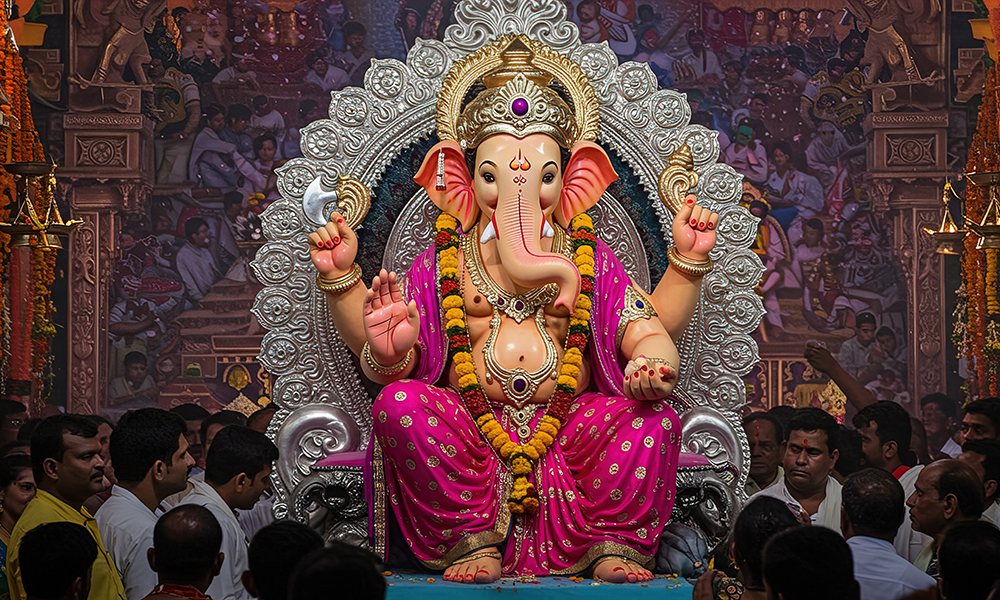
For ten days every year, Mumbai stops being just a city and becomes one giant celebration. Streets fill with music, homes and public squares are lit up with decorations, and the chant of "Ganpati Bappa Morya" echoes from every neighbourhood. This is Ganesh Chaturthi, Maharashtra's biggest festival and one of the most striking cultural experiences anywhere in India.
If you're planning a trip around this time, here's a complete guide to what Ganesh Chaturthi is, how Mumbai celebrates it, and how to experience it as a visitor.
What Is Ganesh Chaturthi?
Ganesh Chaturthi marks the birth of Lord Ganesha, the Hindu deity of wisdom and new beginnings, widely worshipped as the remover of obstacles. The festival, sometimes referred to online under variant spellings such as Bakri Chaturthi, runs for ten days and centres on inviting Ganesha's idol into homes and neighbourhoods, honouring him with daily rituals, and then bidding him farewell through immersion, known as visarjan.
Families and communities install clay idols of the deity in homes, community halls, and temporary pandals, followed by prayers, offerings, and festive rituals that continue until the final day, Anant Chaturdashi, when the grandest processions take place.
Why Mumbai Is the Heart of Ganesh Chaturthi
While the festival is celebrated across Maharashtra and in Hindu communities worldwide, Mumbai has become synonymous with it. Public celebrations in the city trace back to 1893, when the festival was transformed from a private household ritual into a large, community-organised event as a way to bring people together during the freedom movement.
That spirit has carried into the present. Every part of the city, from working-class chawls to upscale neighbourhoods, sets up its own pandal, and no two are alike. Some are known for towering, elaborately decorated idols; others for their intricate lighting displays; others still for keeping the celebration simple and deeply devotional. Mumbai's coastline also plays a defining role, since its beaches become the backdrop for some of the most dramatic Ganesh idol immersion processions in the country.
How the Ten Days Unfold
The festival follows a rhythm that builds steadily:
Installation (Day 1): Idols are brought home or into pandals with music, drumming, and prayer, marking Ganesha's arrival.
Daily rituals: Each day includes aarti (prayer with lamps), darshan (viewing and paying respects to the deity), and devotional offerings of flowers, sweets, and modak, a steamed rice-and-jaggery dumpling considered Ganesha's favourite.
Community gatherings: Evenings often bring traditional music and dance, cultural performances, and neighbourhood get-togethers, especially around the larger public pandals.
Immersion: Depending on the household or community, idols are immersed after one and a half, five, or seven days, though most large public celebrations culminate on the tenth day. On Anant Chaturdashi, processions carry idols through the streets toward the sea, accompanied by drumming, dancing, and chanting, before the final immersion in the Arabian Sea.
In recent years, many communities have shifted toward eco-friendly clay idols and designated immersion tanks, reducing the impact on Mumbai's marine environment while keeping the tradition intact.
Where to Experience Ganesh Chaturthi in Mumbai
Each part of the city offers a different flavour of the celebration:
Lalbaug: Home to Mumbai's most visited Ganesh pandal, drawing devotees from across the country. Expect long queues, especially in the early morning and late at night, and an atmosphere of intense religious fervor.
Girgaon: Considered the birthplace of Mumbai's public Ganesh Chaturthi tradition, with historic pandals that lean more toward devotion and heritage than spectacle.
Parel and Lalbaug lanes: Known for creative, large-scale set designs that reimagine the pandal theme every year, from replica monuments to elaborate stage productions.
Girgaon Chowpatty: The city's most iconic immersion site, where thousands gather on the final day to watch processions arrive at the beach for visarjan.
Beyond the famous pandals, some of the most memorable moments happen in smaller lanes and residential pandals, where local rituals and community gatherings feel more personal and less crowded.
Practical Tips for Visitors
A few things make the experience smoother, especially for international travelers:
Why the Festival Is Worth Experiencing in Person
Ganesh Chaturthi is one of those cultural events Mumbai experiences at full volume, from decorations and lights strung across entire streets to the sound of dhol drums carrying through the night. It's also a rare window into how faith, art, and community gathering intersect in one of India's largest cities. Watching a neighbourhood pandal come together, or standing among the crowds at a beachside visarjan, says more about Mumbai's character than most sightseeing itineraries can.
Plan Your Festival Trip to Mumbai
Ganesh Chaturthi is best experienced with some local context, since the meaning behind each ritual and the significance of individual pandals aren't always obvious to first-time visitors. If you're building a trip around the festival, it pairs naturally with the rest of the region. Explore our West India Tour Packages to combine Mumbai's festival season with the beaches, heritage sites, and cultural experiences found across Maharashtra, Gujarat, and Goa.
Frequently Asked Questions
The festival falls in August or September each year, based on the Hindu lunar calendar, and lasts for ten days, ending on Anant Chaturdashi.
No. It's celebrated across Maharashtra and in Hindu communities across India and abroad, but Mumbai's public celebrations, dating back to 1893, are considered the largest and most iconic.
Yes. Most public pandals welcome visitors. Dressing modestly, being mindful of crowds, and following local etiquette around photography make for a respectful visit.
Modak, a sweet dumpling made from rice flour, coconut, and jaggery, is the festival's signature offering and is widely available from street vendors and sweet shops throughout Mumbai during the celebrations.