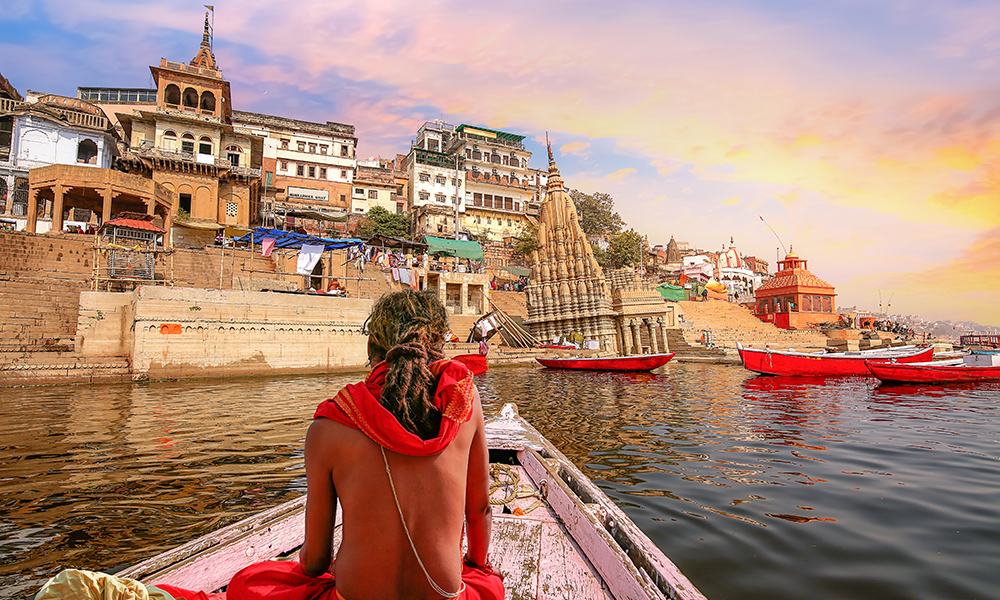
If you're combining Delhi, Agra, and Jaipur with Varanasi, the short answer is October to March, and late November through February is when it comes together best. All four cities sit on or near the Gangetic plain, so their climates rise and fall together. You don't really need two separate "best time" calendars for this trip, just one that accounts for both. The harder question is which specific weeks give you clear skies, fewer crowds, and a festival worth planning around.
Why Golden Triangle and Varanasi Weather Move Together
Delhi, Agra, and Jaipur form a loop of roughly 730 to 750 km, and Varanasi sits further east along the same river belt. In practice that means:
Winter, from November to February, is cool and dry across all four cities, though Delhi, Agra, and Varanasi all get foggy mornings from late December into mid January.
Summer, April to June, is brutal everywhere. Jaipur and Agra can touch 43 to 45°C, and Varanasi isn't much cooler.
Monsoon, July to September, brings humidity and rain to the whole route, though Varanasi's ghats feel quieter and greener during this stretch rather than just wet.
October and March are the shoulder months, with warm days, cleaner light, and noticeably fewer people than peak winter.
| Season | Months | Golden Triangle Temp | Varanasi Temp | What to Expect |
| Peak Winter | Nov to Feb | 7°C to 27°C | 6°C to 29°C | Best sightseeing weather, highest prices, fog through Dec/mid Jan |
| Shoulder | Oct & Mar | 19°C to 34°C | 20°C to 33°C | Clear skies, festivals, moderate pricing, thinner crowds |
| Summer | Apr to Jun | 25°C to 45°C+ | 27°C to 45°C | Extreme heat, deep hotel discounts, early morning sightseeing only |
| Monsoon | Jul to Sep | 24°C to 36°C | 26°C to 34°C | Humid, short rain bursts, greener landscapes, lowest footfall |
Month by Month: What to Actually Expect
October. Temperatures ease into the high 20s and low 30s, humidity drops, and both circuits photograph well. Diwali often falls in this window, so markets in Jaipur and Delhi get festive, but bookings tighten too. Reserve four to six weeks out if you're traveling around the festival.
November. This is a strong month across the board, with daytime highs around 15 to 28°C on the Golden Triangle and a touch warmer in Varanasi. It's also when Dev Deepawali lights up the ghats on Kartik Purnima, turning the riverfront into one of the most photographed nights in India. If you want to catch it, plan Varanasi to land on that date on purpose rather than hoping it lines up.
December. Cold, clear, and festive for the first three weeks, then increasingly foggy after that. Visits before around December 20 tend to be smoother. After that, morning fog can affect both the Taj Mahal viewing and the sunrise Ganga boat ride.
January. This is the fog trap month, and it applies to both circuits, not just Agra. Dense fog can sit over Delhi, Agra, and Varanasi's ghats from around 6:00 to 10:30 AM through mid January, which means a hazy Taj Mahal and a grey sunrise on the Ganga. If you're traveling early or mid January, push the Taj visit to late morning and treat any dawn boat ride in Varanasi as a bonus rather than a sure thing. Makar Sankranti on January 14 and the Jaipur Literature Festival are nice extras if you happen to be passing through.
February. Probably the best all round month for this combined trip. Fog has mostly cleared, temperatures settle into a comfortable 11 to 27°C on the Golden Triangle and similar numbers in Varanasi, and both the sunrise Taj visit and the evening Ganga Aarti come off without a hitch. If weather reliability matters more to you than hitting a specific festival, build the trip around this month.
March. Warming up but still workable, especially in the first half. Holi falls here, and Varanasi has its own particularly lively version of it. If Holi is the anchor of your trip, book heritage hotels three to four months ahead since rooms sell out fast.
April to June. Not ideal for a first combined trip. Hotel rates across both circuits drop 30 to 60 percent if budget matters more than comfort, but sightseeing is realistically limited to early mornings, roughly 5:45 to 9:00 AM.
July to September. The quietest and cheapest stretch, and honestly underrated for Varanasi. The ghats and the river take on a slower, different mood in the rain, with far fewer tourists around. The Golden Triangle side is trickier since fort visits depend more on the weather, though Jaipur's surrounding hills turn green.
Best Time for Smaller Crowds
If avoiding crowds matters as much as good weather, a few specific windows work well:
Early October, before the Diwali rush builds.
The first two weeks of December, after the initial winter crowds but before Christmas and New Year demand, and before the fog sets in.
Mid to late January, once the New Year rush and JLF crowds have cleared, accepting the fog trade off.
Late February into early March, after peak winter but before Holi bookings spike.
November through Dev Deepawali and the Christmas to New Year fortnight are the two busiest, priciest stretches on this whole route. Plan around them unless the festival itself is the reason for your trip.
Syncing Your Route with Festivals
Because Varanasi and the Golden Triangle sit on the same road and rail corridor, it helps to sequence your trip so a festival lands where you'll already be.
For Diwali and Dussehra in October, Delhi and Jaipur's markets are the better places to be, and Varanasi is worth saving for a few days after when the crowds thin out.
For Dev Deepawali in November, build the whole trip around landing in Varanasi on that date and treat the Golden Triangle leg as the lead in.
Makar Sankranti and the Jaipur Literature Festival in mid January are worth catching if you're already traveling that window, but not really worth shifting your dates for on their own.
For Holi in March, Mathura and Vrindavan (right on the route between Delhi and Agra) and Varanasi itself are the strongest places to experience it.
Suggested Sequencing
A practical winter route looks like Delhi, then Agra, then Jaipur, then a flight or train to Varanasi. Ending in Varanasi works well because it rewards a slower final two to three days after the faster pace of the Golden Triangle. If your festival target, like Dev Deepawali, falls earlier in your travel window, it makes sense to reverse the order instead.
Frequently Asked Questions
February. The fog has cleared, temperatures are comfortable across all four cities, and both the sunrise Taj visit and the evening Ganga Aarti tend to go smoothly.
Not entirely, just avoid dawn plans. Shift the Taj visit and any Ganga sunrise boat ride to late morning to work around the fog.
Yes, if seeing the riverfront lit up is a priority for you. Just book hotels, guides, and boats well ahead of time since it's the busiest date on Varanasi's calendar.
Six to eight days is realistic: four to five for Delhi, Agra, and Jaipur, and two to three for Varanasi, plus travel time between them.
That's a shorter, faster trip and the same weather windows apply. Take a look at India Holiday Mall's Golden Triangle tour packages if you'd rather keep it to Delhi, Agra, and Jaipur.
Ready to build your own Golden Triangle with Varanasi itinerary around the right season and festivals? Take a look at India Holiday Mall's Golden Triangle with Varanasi tour packages for options across every travel window.