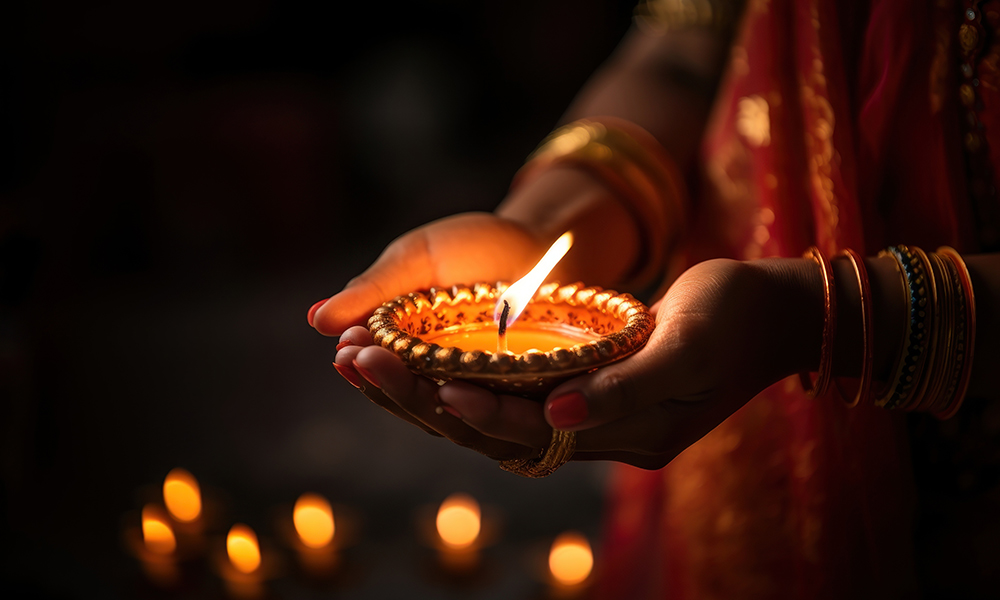
Every year, thousands of travellers fly into India chasing Diwali. They land in Delhi or Jaipur, watch the fireworks, eat the sweets, and fly home believing they have seen India's festival of lights at its fullest. What most of them never learn is that the real spectacle is still fifteen days away, waiting quietly in Varanasi.
That festival is Dev Deepavali, and in 2026 it falls on Tuesday, 24 November, on the night of Kartik Purnima. While Diwali belongs to homes and families, Dev Deepavali belongs to the river. Every one of Varanasi's 84 ghats is lined with over a million earthen lamps, turning six and a half kilometres of riverfront into a single, unbroken sheet of golden light. It is, by most accounts of people who have witnessed both, the more moving of the two festivals. Yet because it doesn't fit neatly into a standard Diwali holiday, it remains one of India's most overlooked travel experiences.
Why This Festival Slips Past So Many Travellers
There is a simple, practical reason Dev Deepavali gets missed so often. Diwali dominates the travel calendar, gets booked into itineraries months ahead, and is the date most people mentally associate with "Indian festival season." Once that trip is done, most travellers assume the season is over and head home.
Dev Deepavali doesn't work on that timeline. It falls a full fortnight later, tied to the Kartik Purnima full moon rather than the new moon that governs Diwali. Anyone who planned their India trip strictly around Diwali dates will already be back home by the time Varanasi lights up. Add to this the fact that Dev Deepavali is a distinctly regional celebration, confined mainly to Varanasi rather than marked across the country, and it simply doesn't get the same global attention. For travellers willing to extend their stay, or plan their trip around this date instead, that gap is exactly the opportunity.
The Story Behind the Festival of the Gods
According to legend, Dev Deepavali marks the day Lord Shiva defeated the demon Tripurasura, freeing the three worlds from his terror. To celebrate this victory, the gods are said to have descended from the heavens to bathe in the Ganges at Kashi and light lamps in celebration. Devotees have followed the same ritual ever since: a pre dawn dip in the holy river, followed by an evening of lighting diyas along the ghats in honour of that divine visit.
This is what separates Dev Deepavali from Diwali at its core. Diwali celebrates Lord Rama's homecoming and the worship of Goddess Lakshmi, and it is a festival of prosperity and family. Dev Deepavali is about spiritual liberation and cosmic order, and it belongs almost entirely to the river and the rituals performed on its banks.
Dev Deepavali 2026: Date and Timings
Dev Deepavali in Varanasi will be celebrated on Tuesday, 24 November 2026, coinciding with Kartik Purnima. The Pradosh Kaal muhurat, considered the most auspicious window for lighting lamps, runs approximately from 5:08 PM to 7:47 PM, which is also when the ghats reach their peak beauty. Celebrations continue well past this window, with the Ganga Aarti, fireworks, and cultural performances stretching into the night.
The days leading up to Dev Deepavali also host the Ganga Mahotsav, a five day cultural festival featuring classical music, dance, boat races, and craft fairs, so travellers who arrive a couple of days early get to experience Varanasi's festive spirit building up gradually rather than arriving all at once.
Where to Watch It: The Ghats That Matter
Every ghat along the Ganges is lit on this night, but each one offers a genuinely different experience.
Dashashwamedh Ghat is the heart of it all. This is where the main Ganga Aarti takes place, with priests performing synchronised rituals using brass lamps, conch shells, and hymns while thousands of diyas cover the steps. It is spectacular, but also the most crowded ghat on this night, so arriving early or watching from a boat is strongly recommended.
Assi Ghat, on the southern end, has a more relaxed, youthful energy. Students and families gather here, and while it is just as beautifully lit, the crowd is easier to manage, making it a good choice for anyone travelling with children or elderly family members.
Panchganga Ghat holds a quieter, more solemn significance because of the Akash Deep ritual, in which tall lamps are lit to guide the souls of the departed. For travellers interested in the deeper spiritual layer of Dev Deepavali rather than the visual spectacle alone, this is the ghat to visit.
Rajghat and Ravidas Ghat, at the far ends of the riverfront, see far fewer tourists yet remain fully illuminated, offering a calmer, more contemplative way to witness the same festival of light.
The Best Way to Experience It: A Boat Ride on the Ganges
The festival follows a rhythm that builds steadily:
If there is one experience that defines Dev Deepavali, it is seeing it from the water. From the shore, you can appreciate one or two ghats at a time. From a boat drifting slowly along the river, all 84 ghats reveal themselves at once, their reflections shimmering across the Ganges as chants and temple bells carry across the water. Many boats also pass close to Dashashwamedh Ghat during the aarti, so you witness the ceremony without being swallowed by the crowd on land.
Boats fill up months in advance for this specific night, so this is not something to leave until arrival. If Dev Deepavali is the centrepiece of your India trip, booking your stay and your boat slot early is the single most important piece of planning you can do.
Planning Your Trip to Varanasi
Getting there: Varanasi is well connected by air through Lal Bahadur Shastri International Airport and by rail through Varanasi Junction, both linked directly to Delhi and other major cities. Given how busy the roads get during the festival, flying or taking the train in is far more reliable than travelling by road on the day itself. You can check current visa requirements for entering India on our Indian visa guide before you book.
Where to stay: Book accommodation as close to the ghats as possible, ideally around Assi Ghat or Dashashwamedh Ghat, and do this several months ahead since rooms sell out quickly for this date.
Weather: Late November in Varanasi is pleasant, with daytime temperatures around 24 to 27°C and cooler evenings closer to 10 to 13°C, along with light morning mist along the river. A shawl or light jacket makes a real difference for the evening aarti and the boat ride. You'll find more seasonal detail on our India climate guide.
A few practical tips: Arrive at the ghats well before sunset to secure a good spot, keep cash handy since networks get congested with the crowds, wear comfortable shoes for the narrow lanes leading to the river, and if you plan to light a diya yourself, choose an eco friendly one.
Extend Your Journey Beyond the Festival
Since you are already making the trip out to Kashi, it is worth building a fuller itinerary around it rather than a single night by the river. Sarnath, just ten kilometres away, is where Buddha delivered his first sermon and offers a calm, contemplative contrast to the intensity of the ghats.
Ramnagar Fort, across the river, gives you a glimpse of the region's Mughal era history along with fine views of the Ganga. Many travellers also combine Varanasi with the more classic circuit of Delhi, Agra, and Jaipur, which our Golden Triangle with Varanasi tour package is built around, letting you pair the Taj Mahal and Rajasthan's forts with the spiritual heart of Kashi in a single trip.
If festivals are what draw you to India in the first place, Dev Deepavali is just one entry point into a much larger calendar. Our festival tour packages cover celebrations across the country through the year, and our recent guide to Ganesh Chaturthi in Mumbai is worth reading if you're curious how differently India celebrates from one city to the next.
Frequently Asked Questions
Dev Deepavali 2026 falls on Tuesday, 24 November, coinciding with Kartik Purnima, fifteen days after Diwali.
Diwali is a home and family centred festival celebrating Lord Rama's return and Goddess Lakshmi, observed across India. Dev Deepavali is centred entirely on the Ganges in Varanasi and marks Lord Shiva's victory over the demon Tripurasura, with rituals focused on the river rather than homes.
Yes. Since it falls two weeks after Diwali, many visitors simply aren't in the country to see it, even though it is widely considered more visually striking than Diwali itself, with over a million lamps lit across the ghats in a single night.
Dev Deepavali is proof that some of India's most extraordinary moments happen quietly, just outside the dates everyone else has already planned around. If you'd like help building a trip timed around it, our team at India Holiday Mall can put together a personalised itinerary that puts you right on the Ganges on the night it matters most.