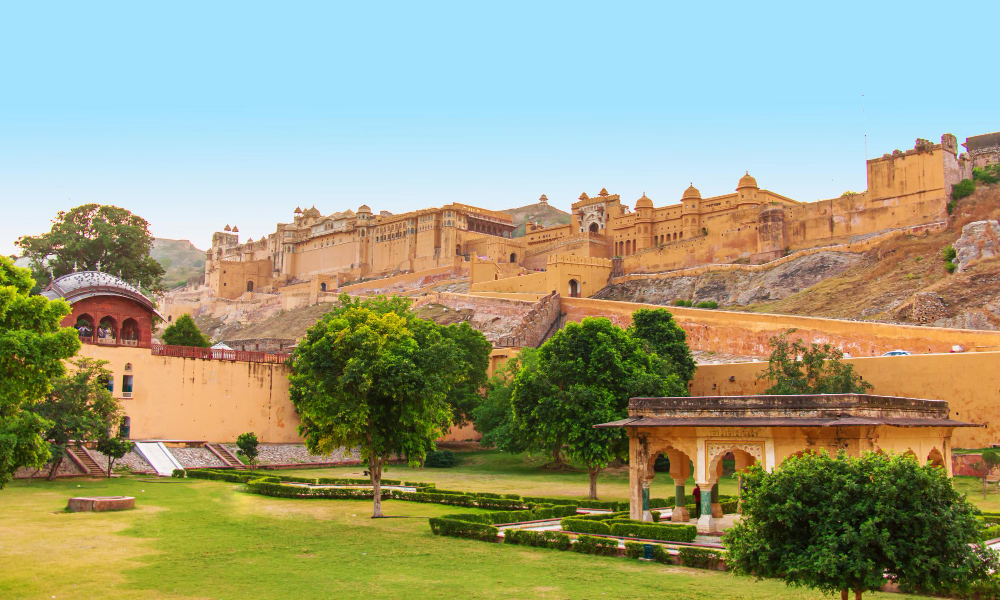
The easiest way to avoid wasting hours on Rajasthan roads is to arrange your cities in one clear direction and choose arrival and departure points that sit at opposite ends of the trip. A well-planned Rajasthan route without backtracking usually starts around Jaipur or Delhi, moves west through Jodhpur and Jaisalmer, then finishes in Udaipur or another practical exit city. The exact order changes with trip length, but the goal stays the same: move forward instead of returning to the same city again and again.
Rajasthan is large, and popular places are spread across very different parts of the state. Jaipur sits in the east, Jodhpur and Jaisalmer are farther west, while Udaipur is in the south. Pushkar, Ranakpur, Kumbhalgarh, Mandawa, and Bikaner work best when they are added between major stops instead of treated as separate out-and-back trips.
Quick Route Logic
Think of the trip as a line, not a collection of city names. Each stop should move you closer to the next overnight base or your final airport, railway station, or onward destination.
For most first-time visitors, the cleanest patterns are:
· Jaipur → Pushkar → Jodhpur → Udaipur for a shorter 6-8 day trip
· Jaipur → Jodhpur → Jaisalmer → Udaipur for a desert-focused 8-10 day trip
· Delhi → Mandawa → Bikaner → Jaisalmer → Jodhpur → Udaipur → Pushkar → Jaipur → Agra → Delhi for a longer circuit
· Udaipur → Ranakpur or Kumbhalgarh → Jodhpur → Jaisalmer for travellers entering from western or southern India
The main exception is Jaisalmer. It sits far to the west, so it naturally creates a longer travel leg when you continue toward Udaipur or return east. That does not make Jaisalmer a bad choice; it simply means you need enough days to absorb the distance.
Rajasthan Route Without Backtracking
A practical Rajasthan route without backtracking starts by deciding your entry city and exit city before you book hotels. Jaipur is a strong arrival point because it has good air, rail, and road links, while Udaipur works well as an exit because it prevents a return drive to Jaipur after the southern part of the trip.
If your international or domestic flights require Delhi, use Delhi as the outside gateway and keep Rajasthan itself moving in one direction. A long itinerary can enter Rajasthan through Mandawa or Jaipur and leave through Jaipur, Udaipur, or Agra depending on the full North India plan.
Build the Route Around Geography
The biggest planning mistake is choosing cities first and drawing the route later. Instead, group places by location and connect nearby stops.
Use this regional order:
· East: Jaipur, Amber, Samode and nearby heritage area
· Central: Ajmer and Pushkar
· West: Jodhpur, Osian, Bikaner and Jaisalmer
· South: Udaipur, Ranakpur, Kumbhalgarh and Chittorgarh
· North-east Shekhawati: Mandawa, Nawalgarh and surrounding haveli towns
This grouping makes it easier to see which stops belong on the same road. For example, Pushkar fits naturally between Jaipur and Jodhpur, while Ranakpur fits naturally between Jodhpur and Udaipur.
Use Stopovers Instead of Extra Hotel Nights
Some Rajasthan places are better as route stops than overnight bases. This reduces hotel changes and keeps the drive useful.
Good stopover combinations include:
· Jaipur to Jodhpur with Pushkar or Ajmer en route
· Jodhpur to Udaipur with Ranakpur on the way
· Jodhpur to Udaipur with Kumbhalgarh as a longer scenic detour
· Udaipur to Jaipur with Chittorgarh if your timing allows
· Mandawa to Bikaner as part of a Shekhawati-to-desert sequence
If you want a ready-made long route that already follows a logical progression through Rajasthan, compare the sequence used in
Rajasthan tour packages. The 14-day Colors of Rajasthan itinerary runs from Delhi through Mandawa, Bikaner, Jaisalmer, Jodhpur, Udaipur, Pushkar, Jaipur and Agra before returning to Delhi, which is a useful model for a full-state circuit.
Handle Jaisalmer Carefully
Jaisalmer is the stop that causes the most route problems because it is far west and does not sit neatly between Jodhpur and Udaipur. If you include it, give the trip enough time so one long transfer does not ruin the pace.
For a seven-day trip, it is often better to choose either Jaisalmer or Udaipur rather than forcing both into the same schedule. With nine to ten days, you can keep both, but you should expect one longer travel day or use a flight or overnight train where practical.
A second Rajasthan route without backtracking option is to finish the western section in Jaisalmer and fly or travel onward from there if your transport dates work. Check current flight and rail schedules before building the whole itinerary around that idea because seasonal connectivity can change.
Match the Route to Trip Length
Five to Six Days
Keep the route tight. Jaipur, Pushkar, Jodhpur and Udaipur form a sensible short circuit when you want forts, old cities, temples, lakes and strong road connections without very long desert transfers.
A simple order is Jaipur for two nights, Pushkar as a stop or one night, Jodhpur for one or two nights, then Udaipur for two nights.
Seven to Eight Days
Add either Jaisalmer or a deeper southern stop, but avoid adding every major city. Jaipur → Jodhpur → Jaisalmer works well for travellers who care most about the Thar Desert, while Jaipur → Pushkar → Jodhpur → Udaipur gives a more balanced route.
If you want Jaisalmer and Udaipur in the same week, expect the itinerary to feel faster and the Jaisalmer-to-Udaipur transfer to take a large part of one day.
Nine to Ten Days
This is a much better length for Jaipur, Jodhpur, Jaisalmer and Udaipur together. Pushkar can fit between Jaipur and Jodhpur, and Ranakpur can fit between Jodhpur and Udaipur if you skip Jaisalmer or rearrange the route carefully.
Two nights in the larger cities also gives you time for evening markets, local food, forts, old-city walks and rest instead of spending every morning checking out.
Eleven to Fourteen Days
A longer trip can include Shekhawati, Bikaner, Jaisalmer, Jodhpur, Udaipur, Pushkar and Jaipur in one broad circuit. This is where a north-to-west-to-south-to-east pattern becomes useful.
You can also connect Rajasthan with Delhi and Agra without repeating the same highway several times. That structure works especially well for travellers visiting North India for the first time.
Choose Arrival and Departure Cities First
Open-jaw travel can save a full day. Instead of flying into Jaipur and forcing yourself to return there, arrive in Jaipur and leave from Udaipur when fares and schedules make sense.
The same idea works with Delhi. If your trip includes Agra, you can move through Rajasthan and finish in Jaipur or Agra before returning to Delhi rather than driving back to Delhi in the middle of the route.
Check current flight and train timings before paying for non-refundable hotels. A perfect road map is not useful if your chosen exit city has no convenient service on your travel date.
Plan Driving Days Around Sightseeing
Do not treat a five-hour drive as a normal sightseeing day. Hotel checkout, breakfast, traffic, fuel stops, lunch and city entry can turn a simple transfer into most of the day.
Use shorter transfer days for major sightseeing and longer transfer days for evening activities. For example, after reaching Jodhpur, keep Mehrangarh Fort for the next morning if your arrival is late.
The same rule protects your energy. Rajasthan forts often involve slopes, stairs and large courtyards, so arriving after a long drive and rushing through them is rarely a good use of time.
Keep Two-Night Bases in Major Cities
Changing hotels every night can make even a logical route feel tiring. Jaipur, Jodhpur, Jaisalmer and Udaipur usually deserve more than a quick overnight if they are major priorities.
Two-night stays reduce packing, give you a full sightseeing day, and create room for delays. Smaller places such as Pushkar, Mandawa or Bikaner can be one-night stops depending on your interests and total trip length.
Avoid These Common Route Mistakes
· Jaipur → Udaipur → Jodhpur → Jaipur, which creates unnecessary east-west movement
· Jodhpur → Udaipur → Jaisalmer, which sends you south before pulling you far back west
· Using Jaipur as the base for every Rajasthan day trip
· Adding Jaisalmer to a five- or six-day route that already includes Jaipur and Udaipur
· Booking return flights before deciding the final city order
· Treating Pushkar, Ranakpur or Chittorgarh as separate round trips when they can fit between major cities
Most of these problems happen because travellers book famous cities one by one. Route planning should come first, then hotels, then local sightseeing.
Transport Choices for a Smooth Circuit
A private car is useful for stopovers such as Pushkar, Ranakpur, Kumbhalgarh and Mandawa because you can move directly from one hotel to the next. It also reduces time spent reaching bus stands or railway stations with luggage.
Trains can be useful on longer city-to-city sectors, especially when the timetable matches your route. Flights can save time on selected long legs, but they may add airport transfers and waiting time.
The best choice is often a mix. Use road transport for connected heritage stops, trains for long direct sectors, and flights only when they save enough time to justify the extra cost.
A Practical Planning Method
1. Write down your arrival city, departure city and total nights.
2. Mark the major cities you refuse to miss.
3. Group those cities by east, west, south and north-east Rajasthan.
4. Remove any stop that forces you to cross the same region twice.
5. Add Pushkar, Ranakpur, Kumbhalgarh or Chittorgarh only when they fit the road between two overnight bases.
6. Give major cities two nights where possible.
7. Check real driving times and transport schedules before booking hotels.
8. Keep one lighter day after your longest transfer.
This method works because it puts geography before wish lists. A good Rajasthan route without backtracking is not the route with the most places; it is the route that gives you enough time to enjoy each place without spending the holiday repeating roads.
Conclusion
The best Rajasthan route without backtracking moves in one clear direction, uses stopovers between major cities, and finishes near a practical airport or railway station. Jaipur, Pushkar, Jodhpur and Udaipur form an efficient short route, while Jaisalmer, Bikaner and Mandawa need extra days if you want a relaxed pace.
For a longer trip, compare a professionally sequenced circuit such as Rajasthan tour packages before fixing your own order. Use the route as a framework, then adjust nights, transport and stopovers to match your arrival point, departure point and travel style.
Frequently Asked Questions
It depends on your arrival city. Jaipur usually works better when coming from Delhi or northern India, while Udaipur can be a strong starting point for travellers arriving from Mumbai, Gujarat or southern routes.
Yes, but it will be fast. One long transfer and limited sightseeing time are likely, so eight to ten days is usually more comfortable.
Yes, if you want the evening aarti, early-morning ghats and a slower pace. If time is tight, Pushkar can also work as a stop between Jaipur and Jodhpur.
Yes, it is a long road sector. Keep a full travel day, use an overnight option where suitable, or redesign the route so Jaisalmer sits at the end of your western section.
Yes, it fits naturally on that route. It is one of the easiest ways to add a major heritage stop without creating a separate round trip.
Yes, for many multi-city routes it is convenient, especially when you want en-route stops. Compare the total cost with trains and flights before deciding.
Two nights are ideal for most first-time visitors. That gives one full day for Mehrangarh Fort, Jaswant Thada, the old city and local markets without rushing.
Yes, place Agra near the beginning or end of the trip. Jaipur connects naturally with Agra, so avoid inserting Agra between western Rajasthan cities.
A strong first route is Jaipur → Pushkar → Jodhpur → Udaipur. Add Jaisalmer when you have enough days to handle the extra western travel.